Lemon Blast: A Fresh Script Font for Creative Branding
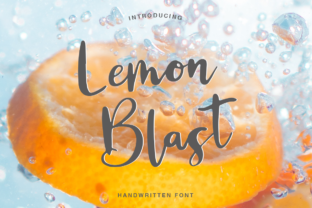
I recently had the chance to test Lemon Blast for a small café brand I was working on. It wasn’t just another font—it felt like a personality, a vibe that could bring a brand to life. As a graphic designer, I’ve used countless fonts over the years, but Lemon Blast stood out with its handmade charm and clean structure. It’s not just a Script Handwritten font; it’s a tool that can elevate branding projects from ordinary to elegant.
Lemon Blast for Wedding Invitations and Elegant Branding
When I first opened the Lemon Blast font in my design software, I immediately thought of wedding invitations. The script is fresh, with a slight flourish that feels both modern and timeless. It’s perfect for creating a sense of warmth and sophistication. I started by sketching out a few logo drafts for the café, and Lemon Blast worked beautifully as a headline font. Its soft curves and consistent stroke weight gave the brand a friendly yet professional feel.
One of the things I loved about Lemon Blast is how it balances detail with readability. It’s not too ornate to be confusing, which is crucial when designing for different platforms. I tested it on social media graphics, website headers, and even packaging mockups. Every time, it maintained its character while remaining legible at smaller sizes.
Lemon Blast for Blog Designs and Web Content
Blogs are a great place to showcase a font’s versatility. I used Lemon Blast as an accent font on a client’s blog redesign, pairing it with a clean sans serif typeface for contrast. The result was a visual hierarchy that made content easy to read while still feeling stylish. It’s important to note that Lemon Blast works best in short-form text or as a display font rather than for long body copy. That said, it adds a nice touch to headlines, callouts, and signature sections.
For web design, I found that Lemon Blast performed well on both desktop and mobile screens. Its character set includes common ligatures and alternates, making it adaptable for various design needs. I also appreciated the included weights and styles, which allowed me to experiment with different levels of boldness and subtlety without compromising the font’s identity.
Lemon Blast for Logo Design and Brand Identity
Logo design is where a font can really make or break a brand. When working on the café project, I wanted something that felt personal and inviting. Lemon Blast provided the right balance of elegance and approachability. I experimented with different weights and spacing to find the perfect look. It turned out to be ideal for a logo that needed to convey both creativity and reliability.
What I noticed was how Lemon Blast maintained its character even when scaled down. This is especially useful for business cards, signage, and other printed materials. I tested it on a sample menu and found that it looked great against a simple background, drawing attention without overwhelming the viewer. It’s a font that can work across multiple mediums without losing its appeal.
Lemon Blast for Packaging and Merchandise
Another use case I explored was packaging design. I created a mockup for a skincare line using Lemon Blast on product labels and tags. The font added a handcrafted feel that complemented the natural ingredients and minimalist aesthetic of the brand. It worked well with both solid color backgrounds and subtle textures, making it versatile for different design styles.
I also considered how Lemon Blast would look on merchandise like t-shirts, mugs, and stickers. It’s important to ensure a font looks good in both digital and print formats. I checked the font’s file formats and licensing details to make sure it met the commercial requirements for the project. The fact that it includes multilingual support was a bonus, especially since the brand aimed to reach a wider audience.
Lemon Blast for Social Media Graphics and Editorial Design
Social media is a key platform for brand visibility, and Lemon Blast proved to be a great fit for Instagram posts, Facebook banners, and newsletter headers. Its handwritten style adds a personal touch that resonates with audiences looking for authenticity. I paired it with a modern sans serif font for contrast, creating a balanced composition that felt both professional and creative.
In editorial design, Lemon Blast worked well as a supporting typeface alongside a serif font. It helped highlight quotes, titles, and key messages without overpowering the rest of the layout. I found that using it sparingly—on callouts or sidebars—kept the design clean while still adding visual interest.
Lemon Blast for Print and Digital Branding Projects
Whether it’s a printed brochure, a website header, or a product label, Lemon Blast has shown itself to be a reliable choice. I tested it on a variety of surfaces and found that it maintained its quality in both high-resolution prints and digital displays. Its consistency across different formats makes it a valuable asset for any designer working on a cohesive brand identity.
One thing I recommend is testing the font early in the design process. It’s easy to fall in love with a font before seeing how it performs in real-world applications. I found that Lemon Blast worked well in most scenarios, but I also noted that it might not be the best fit for every project. For example, it’s not ideal for long paragraphs or technical documents, where clarity is paramount.
Lemon Blast for Creative Studios and Small Businesses
For small businesses and creative studios, having a font that can adapt to different needs is essential. Lemon Blast offers flexibility in terms of use cases, whether it’s for branding, packaging, or digital assets. It’s a font that can grow with a brand, evolving as the business expands and changes.
When working with clients, I always suggest testing fonts in different contexts before finalizing them. Lemon Blast is no exception. It’s important to consider how it will look on different materials, colors, and layouts. With a bit of experimentation, you’ll find that Lemon Blast can become a staple in your design toolkit.